Table of Contents
If you’ve ever watched water pool on your roof during a heavy storm, you already know how stressful it feels. That standing water sits there, getting heavier by the second, and you can’t help wondering if your roof is handling it well. The truth is simple: your roof can only drain water properly when the roof drain pipe size is right. If the pipe is too small, water backs up. If it’s too large, other issues can show up. Either way, proper sizing matters more than most people realize. A small mistake here can lead to leaks, sagging, or even structural issues. So today, let’s talk about drain pipes for the roof in plain, friendly language. By the end, you’ll know exactly what to look for and how to make smarter decisions for your roof.
Why Roof Drain Pipe Size Matters So Much
Credit: en.lessopipe.com
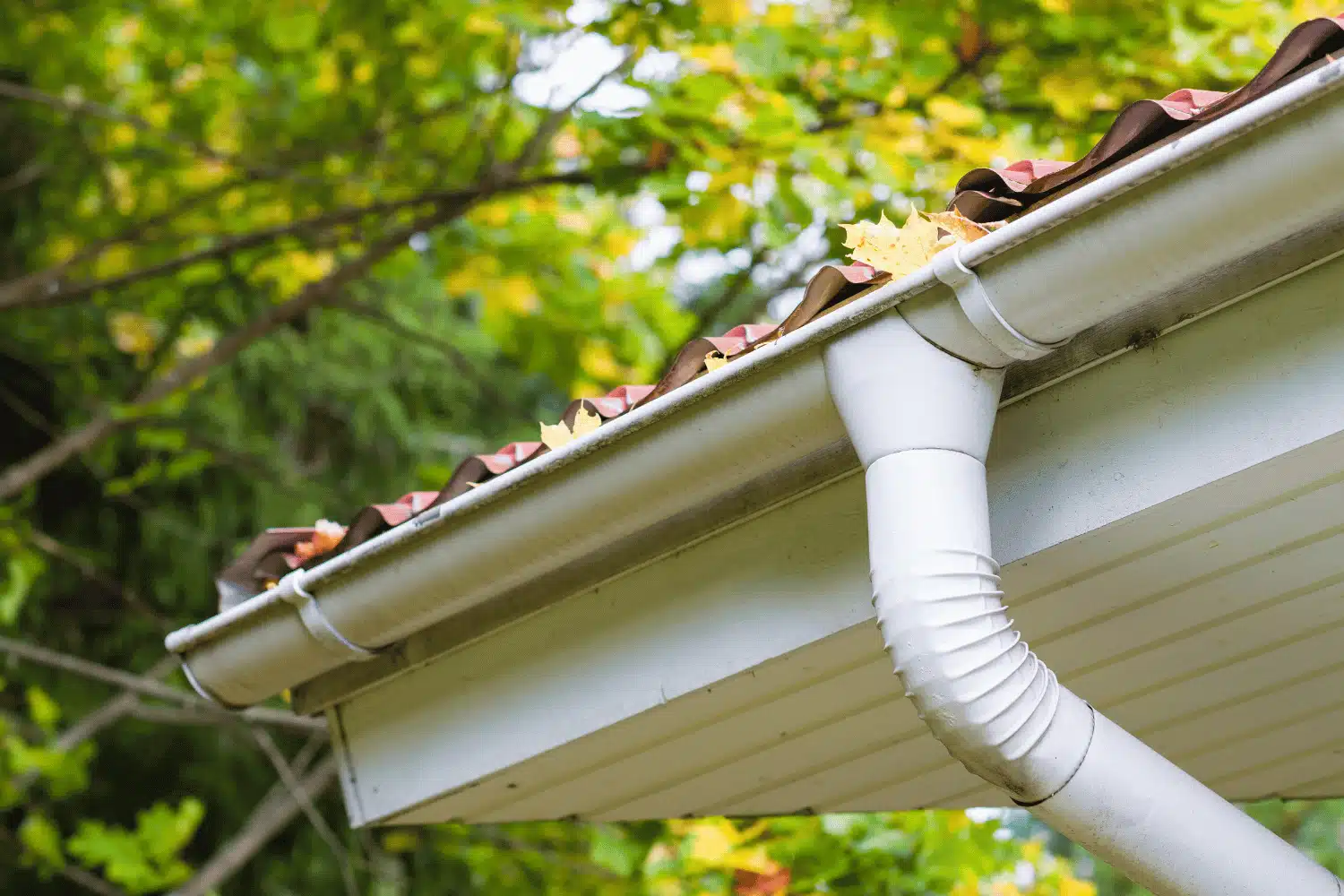
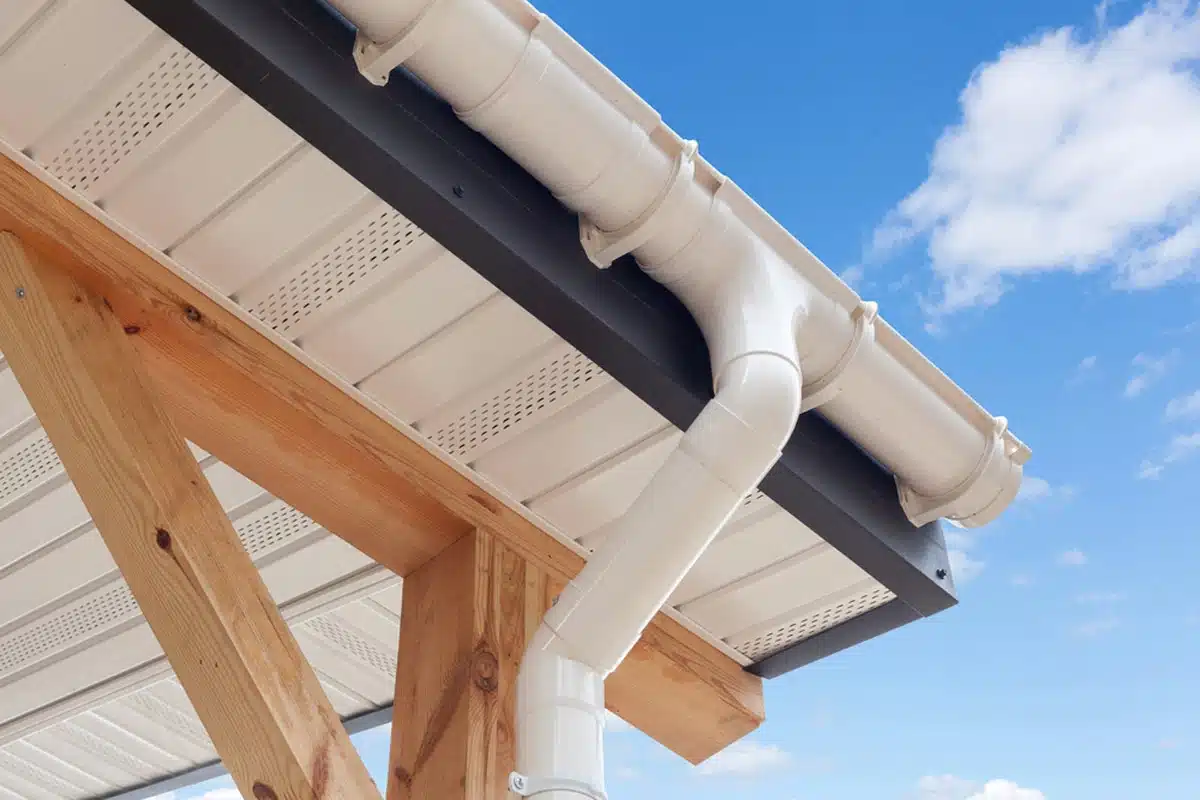
Your roof drainage system depends completely on the right pipe size. When the sizing is correct, water flows smoothly and safely down the system. When it’s wrong, things get messy. Backups happen. Ponding starts. You may even see standing water after storms.
Here are a few simple reasons why size matters:
- Bigger types of roofs require bigger drainage capacity.
- Small pipes clog fast and create blocked roof drain pipe issues.
- Correct sizing protects your home from water damage.
- Good drainage prevents costly repairs and long-term issues.
Even small roofs need proper drainage to keep things safe.
How Roof Drain Pipe Sizes Are Determined
Roof drain sizing is not a random guess. It follows codes, guidelines, and basic math. The two biggest factors are roof area and rainfall rate. Both determine how fast water collects and how quickly it must drain.
Let’s break it down in easy terms.
Roof Area
Credit: richardsonplumbing.com.au
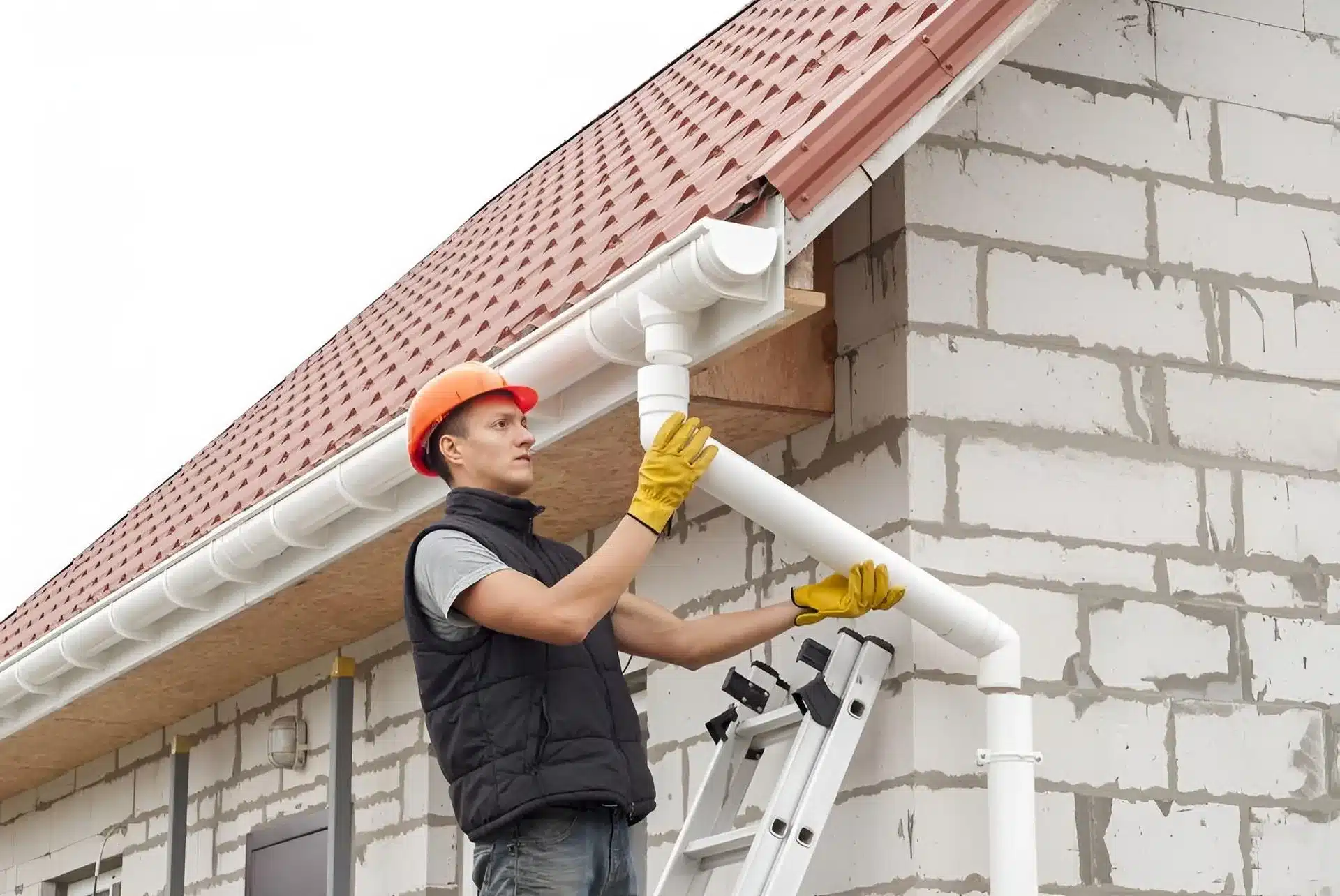
Your roof’s size decides how much water collects during a storm. A bigger roof means more water. Simple as that. But it’s not only about total square footage. Slope and direction of flow also matter.
For example:
- A flat roof holds water longer.
- A sloped roof drains faster but still needs proper piping.
- Multiple roof sections may drain into one pipe.
Every drop must travel through the drain system, so pipe sizing must match the total load.
Rainfall Intensity
Some areas get gentle rain. Others get sudden, heavy downpours. Drain pipe size must handle the worst-case rainfall for your region. Local building codes usually list rainfall intensities for your area.
High rainfall areas require larger pipes because water accumulates much faster.
Drain Location and Quantity
Credit: ny-engineers.com
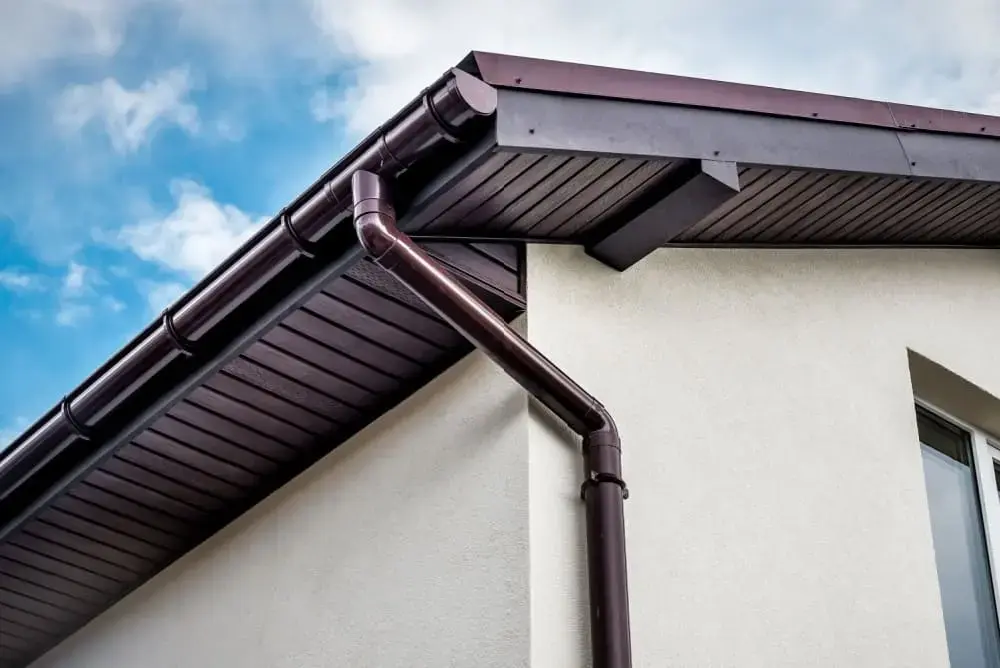
One big drain can’t handle an entire roof alone. So most roofs use multiple drains spread across the surface. The number of drains affects pipe size because each drain carries a portion of the total load.
If you have:
- Fewer drains → larger pipe needed
- More drains → smaller pipes may work
But everything must balance with roof design and code requirements.
Vertical vs. Horizontal Sections
The direction of the pipe affects performance. Vertical drops move water quickly. Horizontal pipes slow the flow. So horizontal sections often need adjustments to support proper drainage.
Building and Plumbing Codes

Credit: 41lumber.com
You can’t ignore this part. Local codes decide the minimum requirements for roof drain pipe size. These rules protect buildings and ensure systems meet safety standards.
Always check:
- International Plumbing Code (IPC)
- Uniform Plumbing Code (UPC)
- Local amendments
- Engineering recommendations
So, following the code is critical for safety, insurance, and compliance.
Typical Roof Drain Pipe Sizes
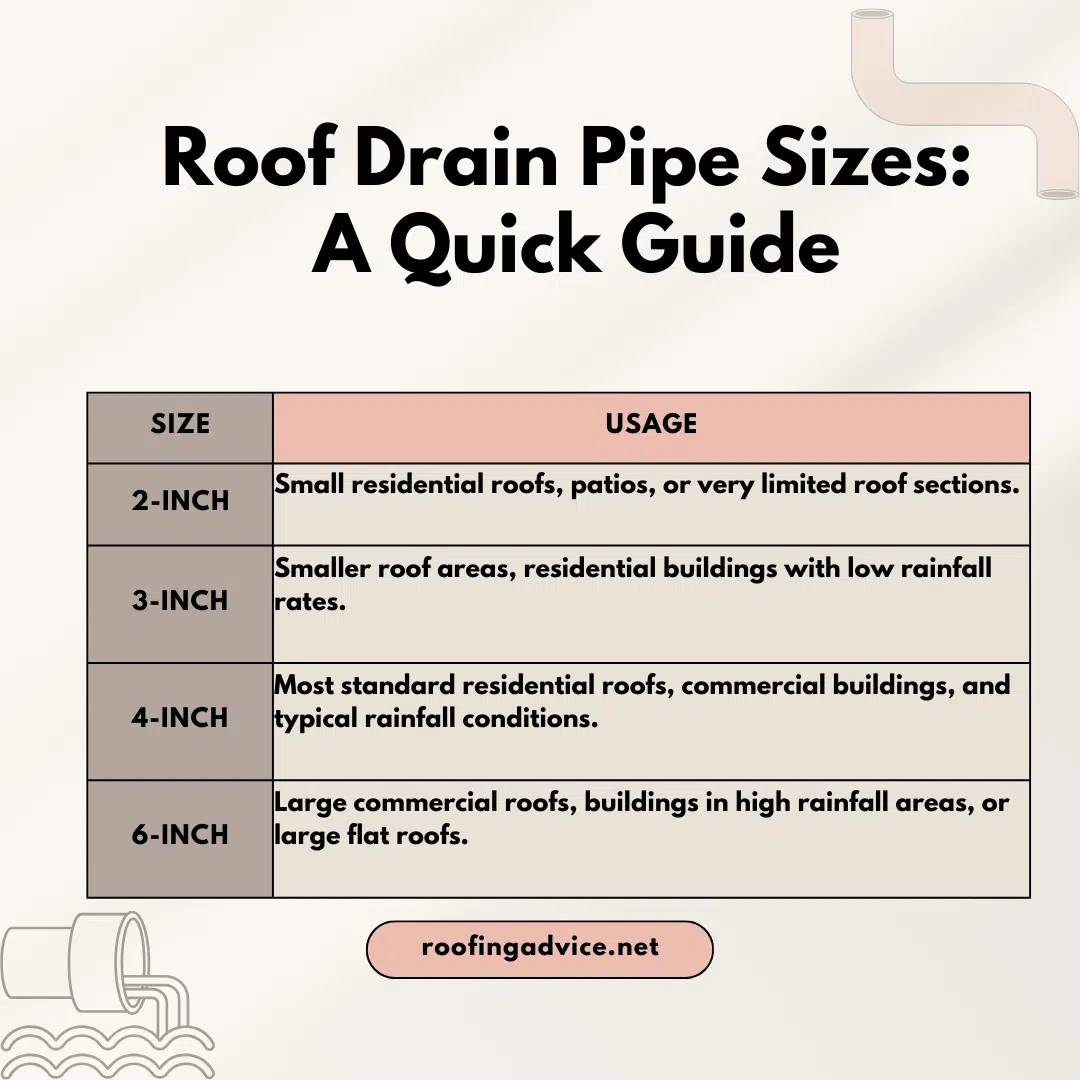
Common sizes include:
- 2-inch pipes for very small areas
- 3-inch pipes for small roof sections
- 4-inch pipes for most residential setups
- 6-inch pipes for large commercial roofs
A 4-inch water drain pipe from the roof systems is very common because it handles most rainfall loads.
You may also see older homes using cast iron systems, while newer roofs use PVC or stainless steel. Material can also affect the roof drain pipe price and longevity.
Flat Roof vs. Sloped Roof Drain Pipe Sizing
Each type of roof has a different demand. Let’s look at the two most famous ones.
Flat Roofs
So, we all know that flat roofs hold water longer, so they need larger drains, overflow drains, and strong piping.
Sloped Roofs
Sloped roofs drain faster and often use gutters, but internal drains still appear on some designs.
Signs Your Roof Drain Pipe Is the Wrong Size
Common warning signs include:
- Slow drainage
- Overflow during storms
- Water stains
- Ponding or standing water
- Gurgling noises
- Frequent clogged drain issues
- Water is backing up into a cleanout for the roof drain pipe
If you see any of these, size or blockage may be the problem.
What Happens When Roof Drain Pipes Are Too Small
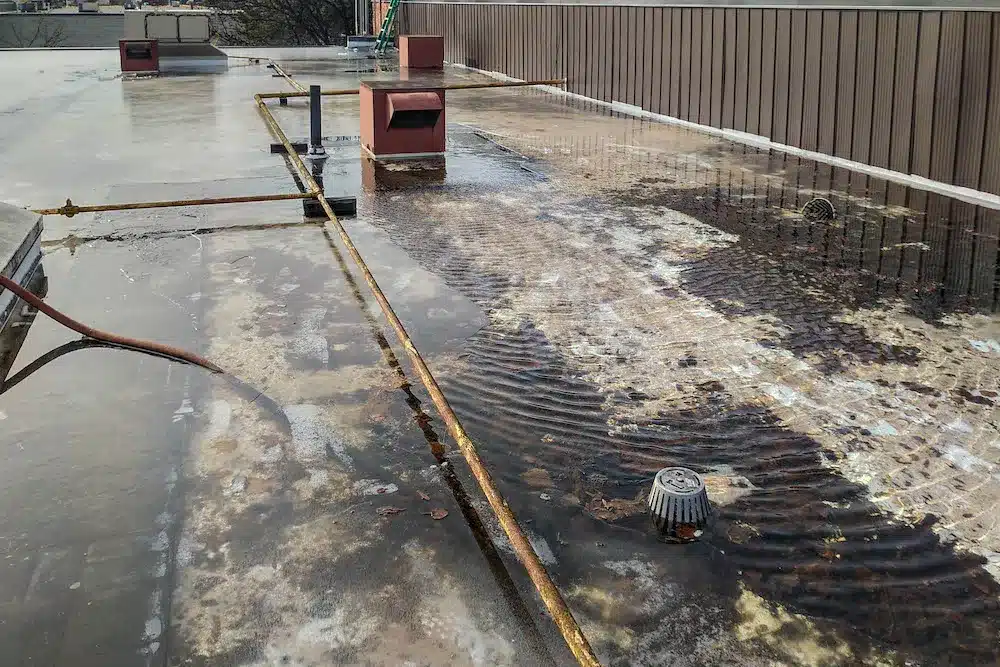
Credit: eliteroofing.com
Small pipes cause:
- Ponding
- Structural stress
- Leaks
- Mold on roof
- Drain backups
- Damage to insulation
Small pipes also increase the need for roof drain pipe repair.
What Happens When Roof Drain Pipes Are Too Large
Oversized pipes slow the water flow. Debris settles inside and forms blockages. This leads to clogs and backup issues later.
Balance is always best.
How to Improve Roof Drainage Without Replacing Everything
Here are simple upgrades that help:
- Add More Drains – More drains reduce the load on each pipe.
- Install Overflow Drains – These help during extreme storms.
- Clean Drains Often – Roof debris builds up fast.
- Learn how to unblock a Roof Drain Pipe – Light clogs sometimes clear with a garden hose, depending on your setup.
- Upgrade Strainers – Better strainers prevent large debris from entering pipes.
- Replace Old Material – Old cast-iron pipes often clog and rust over time.
Do You Need a Roofing Expert?
Most homeowners should involve a professional. Experts understand rainfall data, roof slope, building codes, and roof drain pipe installation best practices. They can calculate the correct size, recommend materials, and install the system safely.
DIY mistakes here can lead to leaks, structural problems, or expensive repairs later.
Ending Remarks
Understanding roof drain pipe size protects your roof from long-term water damage and keeps stormwater flowing correctly. Proper sizing supports a strong, efficient drainage system that lasts for years. Whether you’re upgrading or building new, choosing the right pipe size will help your home stay safe during the next heavy rain. Also, if you want to know which roof is best in rainy weather, you can visit our article here.
Frequently Asked Questions
And we will end our discussion on roof drain pipe size by answering a few questions.
What is the most common roof drain pipe size?
A 4-inch pipe works best for most residential roofs due to its strong flow capacity.
How do I know if my roof drain pipe is too small?
Look for ponding water, slow drainage, frequent clogs, or backup during storms.
Can I unblock a roof drain pipe myself?
Light clogs may clear with a garden hose, but severe blockages require a professional.
Does material affect the roof drain pipe price?
Yes. PVC is cheaper, while stainless steel and cast iron cost more but last longer.
Do flat and sloped roofs need different drainage designs?
Yes. Flat roofs need larger drains, while sloped roofs rely more on gutters or fast-flow systems.